
Registered Office Address: 11, D Purva Oceana, Marine Drive, Ernakulam North, Ernakulam - 682 018, Kerala, India

Professional development

Facilitation
Skills

Practical facilitation skills for teachers and leaders to guide discussions, encourage collaboration and help groups achieve meaningful outcomes.

Explore the course
Course overview

Move groups from discussion to meaningful action.

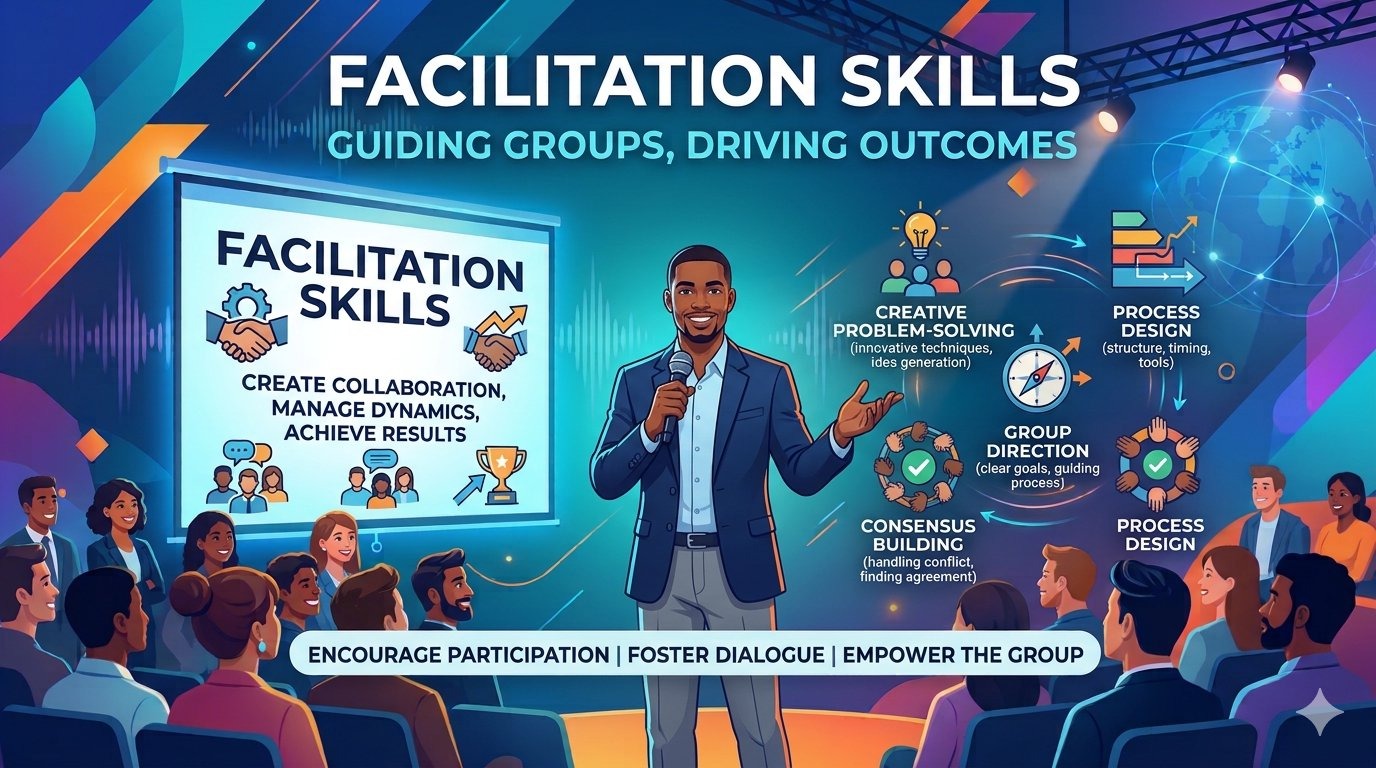
Facilitation skills enable teachers and leaders to guide discussions, encourage collaboration and help groups achieve meaningful outcomes.

Build the confidence to design effective sessions, manage group dynamics, resolve conflicts, encourage inclusive participation and turn ideas into clear, actionable next steps.

What you will develop

Course focus areas

Six practical areas for planning and leading effective group sessions.

01

Foundations and Mindset

  1. Teaching vs. FacilitationMove from knowledge delivery to collaborative learning.
  2. Neutrality and EthicsRemain impartial, set boundaries and establish responsibilities.
  3. Facilitator's RoleGuide participation, decision-making and group processes.
02

Session Design and Preparation

  1. Agenda PlanningStructure meetings, workshops and retreats with clear objectives and timelines.
  2. Group Decision-MakingManage divergent thinking, the “Groan Zone” of uncertainty and convergent thinking.
03

Core Communication Techniques

  1. Active ListeningListen attentively, paraphrase and clarify meaning.
  2. Powerful QuestioningAsk open-ended questions that stimulate reflection and problem-solving.
  3. Non-Verbal CommunicationUse body language and spatial awareness to encourage participation.
  4. Clear InstructionsExplain activities, expectations and outcomes concisely.
04

Group Dynamics and Room Management

  1. Inclusion and Psychological SafetyEnsure equal participation and value diverse perspectives.
  2. Energy ManagementMonitor engagement and incorporate breaks or interactive activities.
  3. Conflict ResolutionAddress disagreements, manage challenging behaviours and prevent unproductive discussions.
05

Outcomes and Accountability

  1. Consensus BuildingUse dot-voting, prioritisation and effort-impact matrices.
  2. Visual DocumentationRecord ideas, decisions and discussions clearly.
  3. Action PlanningAssign responsibilities, deadlines and measurable next steps.
06

Hybrid and Virtual Facilitation

  1. Digital CollaborationUse Miro, Mural and virtual whiteboards.
  2. Online EngagementManage breakout rooms, remote participation and virtual discussions.
  3. Hybrid DeliveryAdapt facilitation methods for both in-person and online participants.
Learning outcome / key takeaway

Lead groups with confidence.

Participants will be able to design effective sessions, manage group dynamics, resolve conflicts, encourage inclusive participation and achieve clear, actionable outcomes.